

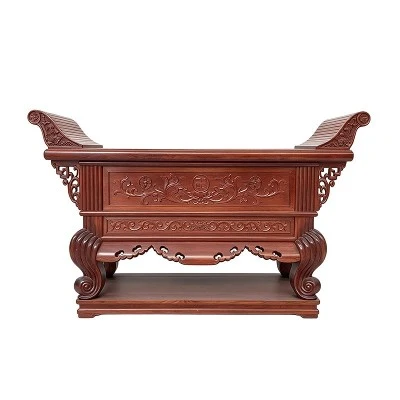
The offering table often forms part of a furniture set that includes a long narrow side table (*tianranji*), a large square table (*baxianzhuo*), and two individual seats or a pair of armchairs. Positioned in front of the long side table, the offering table features a flat top without upturned ends and stands on four legs at the same height as the square table.
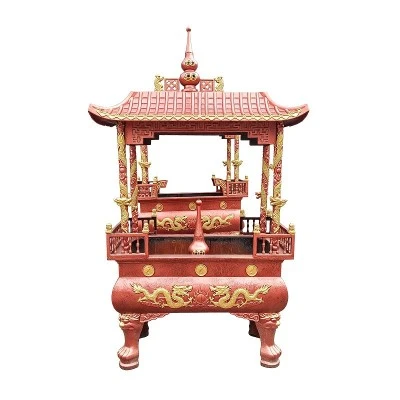
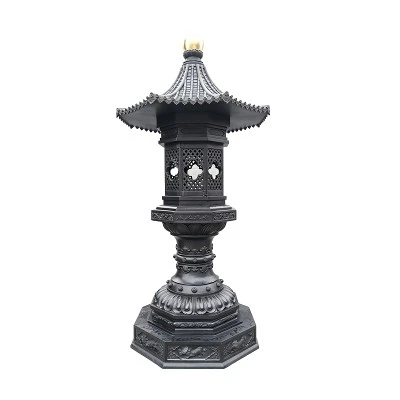
During rituals, a "Set of Five Offerings" (*wugong*) is arranged on the table, consisting of a central incense burner flanked by candles and vases. These items may be crafted from copper, cloisonné, or porcelain. When offering incense, three sticks are lit simultaneously and then inserted separately. Ancestral tablets may be arranged in multiple tiers, yet bowls and chopsticks are placed only in the front row. Offerings are presented by female family members; servants are not permitted to perform this task. From the initial setup until the offerings are cleared, the incense and candles must remain lit, requiring constant monitoring and replacement. The duration of the display varies; some families keep it from the 30th day of the twelfth lunar month through the first day of the new year, while others maintain it until the fifteenth day (the Lantern Festival). Offerings include chicken, duck, fish, meat, and fruit, but exclude stir-fried dishes; the food is reheated for the New Year's Eve dinner after the ritual. Following the removal of the main offerings, clear tea is served, and *nian-gao* (sticky rice cakes) and dumplings are offered on the first day of the new year.
During Spring Festival rituals, the offering table is set up at the beginning of the first lunar month. The 14th day marks the main day for ancestor worship; following the ceremony, the display remains open for viewing until it is dismantled on the 18th day. Over time, the shape of the offering table has evolved beyond the traditional rectangle to include octagonal and elongated oval designs.